
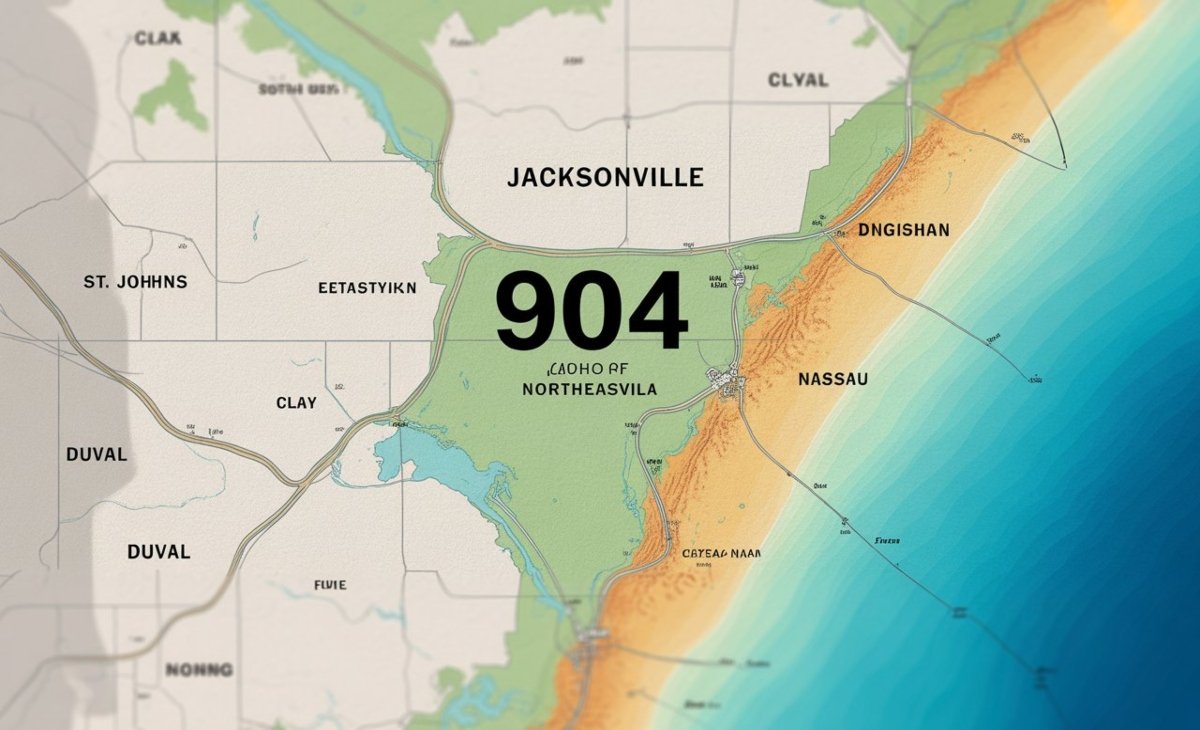
When you receive a phone call, the first three digits often tell you more than just the number — they reveal a geographic identity. For residents and businesses in northeastern Florida, the 904 Area Code Location carries significant recognition. It has become synonymous with Jacksonville and surrounding communities, and in recent years, it has been joined by a new overlay, 324, to meet increasing demand.
But where exactly is the 904 area code location? Why was an overlay necessary? How do these codes affect dialing, business identity, and even cultural significance? In this article, we’ll explore the complete story of the 904 area code, diving deep into its past, present, and future.
904 Area Code Location and Geographic Coverage
The 904 area code is based in the northeastern corner of Florida. Its central hub is Jacksonville, the largest city by population in Florida and one of the largest cities by land area in the U.S.
However, 904 doesn’t stop at Jacksonville. It expands across several counties and coastal regions, creating a broad and diverse footprint.
Counties Covered by 904
The main counties within the 904 region include:
- Duval County (home to Jacksonville, Jacksonville Beach, Atlantic Beach, Neptune Beach)
- St. Johns County (St. Augustine, Ponte Vedra Beach, Nocatee)
- Clay County (Orange Park, Middleburg, Green Cove Springs)
- Nassau County (Fernandina Beach, Yulee, Callahan, Hilliard
- Baker County (Macclenny, Glen St. Mary)
- Bradford County (Starke and surrounding communities)
- Union County (Lake Butler and nearby areas)
This coverage gives the 904 area code a mix of urban, suburban, rural, and coastal communities, making it unique compared to other Florida area codes.
Major Cities in the 904 Region
Some of the most well-known cities within the 904 coverage area include:
- Jacksonville – Florida’s largest city, a major business, cultural, and transportation hub.
- St. Augustine – The oldest continuously inhabited European-established settlement in the U.S., rich in history and tourism.
- Fernandina Beach – A charming island community known for beaches and historic districts.
- Orange Park – A suburban community serving as a residential hub for Jacksonville.
- Macclenny – A smaller city offering rural charm in Baker County.
Each of these areas gives the 904 identity a balance between metropolitan growth and historic coastal life.
Time Zone of the 904 Area Code
The 904 area code location falls within the Eastern Time Zone (ET).
- Standard Time: UTC – 5 hours
- Daylight Saving Time: UTC – 4 hours
This means that residents of Jacksonville and surrounding areas observe daylight saving changes, which align with much of the U.S. East Coast. For callers dialing into 904 from other regions, especially from Central or Pacific time zones, it’s important to consider the time difference before making calls.
The History of the 904 Area Code
Early Assignments
The North American Numbering Plan (NANP) was introduced in 1947 to organize telephone numbering in the United States. At first, Florida was assigned only a single area code — 305, covering the entire state.
By the 1960s, with Florida’s population booming, new area codes were needed. In 1965, the 904 area code was created to serve northern Florida, stretching much further than it does today.
Shrinking Geographic Reach
Over time, population growth and the explosion of telecommunication devices required further splits. Parts of the original 904 region were reassigned to new area codes:
- 850 was created in 1997, serving the Florida Panhandle.
- 386 was created in 2001, covering areas such as Daytona Beach.
After these splits, 904’s territory became concentrated on northeastern Florida, where it remains today.
The Introduction of the 324 Overlay
In 2024, the Florida Public Service Commission announced the addition of area code 324 as an overlay to the existing 904 area.
Why Was the Overlay Needed?
Every area code has a limited number of prefixes (the three digits after the area code, like 904-555). With millions of mobile devices, landlines, and VoIP services in use, the supply of available numbers was running low.
An overlay was chosen over another geographic split because:
- Existing numbers would not have to change.
- Businesses could maintain continuity in branding.
- Residents would not be forced to update all their contact information.
What Changed for Dialing?
With the overlay, 10-digit dialing became mandatory. That means even local calls within Jacksonville must now be dialed with the area code + 7-digit number.
For example:
Instead of dialing 555-1234, residents must now dial 904-555-1234 or 324-555-1234.
Cultural and Economic Significance of 904
Area codes often transcend simple functionality — they can become part of a region’s identity and culture.
Jacksonville and 904
In Jacksonville, 904 is more than just an area code; it is a local brand. Businesses use it in names, sports teams and fans reference it, and residents embrace it as a symbol of northeastern Florida pride.
Similar to how “212” signifies New York City or “305” is tied to Miami, 904 has become shorthand for Jacksonville’s community and lifestyle.
Business Impacts
Having a local area code is especially important for businesses that want to appear trustworthy to nearby customers. A 904 number signals a strong regional presence, while the new 324 will gradually gain similar recognition.
Spotting Calls from 904
When you see a 904 phone number pop up on your caller ID, it’s usually a call from Jacksonville or nearby communities. However, scammers sometimes use “spoofing” — making their numbers appear local to trick recipients.
Residents are advised to:
- Verify unknown callers.
- Be cautious with personal information.
- Remember that even familiar-looking area codes can be misleading.
Why Area Codes Still Matter in the Digital Age
Some may argue that area codes are less important now that smartphones can call anywhere. But in reality, they still matter for several reasons:
- Local Trust: Customers are more likely to answer a call from a local number.
- Cultural Branding: Area codes become identifiers of pride and belonging.
- Business Expansion: Multiple numbers with local codes allow companies to expand presence.
- Regulation and Organization: Area codes keep numbering systems structured and prevent conflicts.
FAQs About the 904 Area Code Location
Q: Where is the 904 area code located?
A: It is located in northeastern Florida, centered around Jacksonville, and covering several surrounding counties.
Q: Is 904 the only area code for Jacksonville?
A: No. As of 2024, 324 also serves Jacksonville and the same geographic area as an overlay.
Q: Do I need to dial the area code for local calls in Jacksonville?
A: Yes. Because of the overlay, 10-digit dialing is required even for local calls.
Q: Will my 904 number be changed to 324?
A: No. Existing 904 numbers remain the same. Only new numbers may receive the 324 code.
Q: What time zone is the 904 area code in?
A: The 904 area code follows the Eastern Time Zone (ET).
Q: Does 904 cover St. Augustine?
A: Yes, St. Augustine and other communities in St. Johns County are part of the 904 region.
Q: Are calls from 904 always local to Florida?
A: Not always. Scammers can spoof numbers, so be cautious with unexpected calls.
Conclusion
The 904 area code location is more than just digits — it represents a thriving, diverse, and historic region of northeastern Florida. From Jacksonville’s bustling city life to St. Augustine’s historic streets and Fernandina Beach’s coastal charm, 904 binds these communities together with a shared identity.
As the population grows, the introduction of the 324 overlay ensures that both residents and businesses will have enough numbering capacity for years to come. While dialing habits have shifted, the core identity of 904 as a symbol of Jacksonville pride remains strong.
In a digital era where communication evolves rapidly, area codes still anchor communities to a sense of place and belonging. And for northeastern Florida, that anchor will always be 904.
